

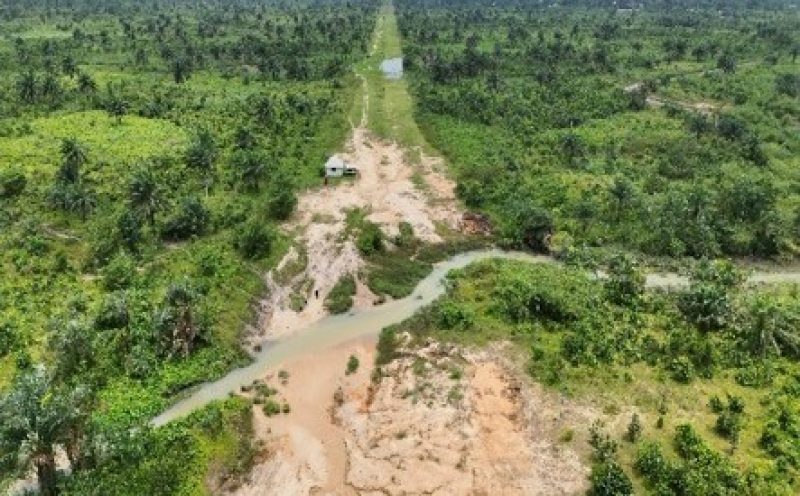
Nigeria’s efforts to increase crude oil production are placing renewed attention on the integrity and security of pipelines used to evacuate crude from producing fields.
The development comes as national oil output has recovered from the levels recorded in 2022.
In a statement issued in April 2026, the Nigerian National Petroleum Company Limited (NNPC) said crude production increased from about 960,000 barrels per day in 2022 to an average of 1.71 million barrels per day in 2025, with output reaching a peak of 1.84 million barrels per day.
NNPC attributed part of the improvement to an integrated pipeline protection model involving intelligence gathering, security deployment, regulatory oversight, industry cooperation and community-based surveillance.
The recovery has continued into 2026.
Data from the Nigerian Upstream Petroleum Regulatory Commission (NUPRC) showed crude production of 1.56 million barrels per day in June, which the regulator described as the highest monthly output since April 2020.
NUPRC attributed the improvement to stable operations and the absence of major pipeline disruptions.
By August, Nigeria had met its Organisation of Petroleum Exporting Countries (OPEC) crude production quota for the fourth consecutive month, while the Forcados Terminal recorded an average of 317,400 barrels per day of crude and condensate.
The relationship between pipeline security and production is significant because disruptions to evacuation infrastructure can force operators to shut in production when crude cannot be transported safely to export terminals.
NUPRC data showed that vandalism and crude theft contributed to a decline in oil production in the second quarter of 2024. The regulator also reported that sabotage accounted for 59.01 per cent of 732 oil spill incidents recorded during the year.
Community engagement has increasingly formed part of efforts to protect oil and gas infrastructure. Pipeline Infrastructure Nigeria Limited (PINL) said its programmes had reached more than 6,000 people across Abia, Imo, Bayelsa and Rivers States. BuyMaps
According to the company, the initiatives include about 2,000 scholarships, as well as grants, skills training and mentoring programmes for women and young people.
The approach is also reflected in recent government policy.
In June 2026, NUPRC and the Federal Ministry of Defence announced plans to strengthen non-kinetic approaches to protecting oil and gas infrastructure, including greater community engagement and the use of drone surveillance.
Beyond production volumes, improved pipeline security could help reduce environmental incidents associated with vandalism and crude theft while supporting more reliable crude evacuation and export operations.
Sustaining the recent increase in oil production will therefore require continued investment in pipeline integrity, effective response to infrastructure breaches and cooperation between operators, security agencies, regulators and host communities.
For Nigeria, maintaining production will depend not only on the ability to bring crude to the surface but also on ensuring that the infrastructure required to evacuate it remains secure and operational.
Source: This Day Live