

By Engr. Charles Deigh
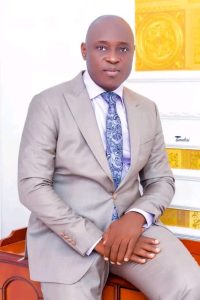
There is a particular kind of leadership that does not announce itself through slogans or spectacle, but through steady, visible work. Dr. Daniel Charles, member of the Bayelsa State House of Assembly representing Brass Constituency I, belongs to that quieter tradition of public service — one measured less by what is promised and more by what is delivered.
Since taking his seat in the Assembly, Dr. Charles has built a reputation as a lawmaker who treats representation as a responsibility rather than a title. His legislative interests have consistently centered on the issues that shape ordinary lives: education, healthcare, and social inclusion.
He was part of an Assembly committee that visited the Education Development Trust Fund to discuss ways of strengthening technical and vocational training in the state — a reminder that development often begins with unglamorous, behind-the-scenes work.
He has also taken part in debates on the Bayelsa Health Insurance Scheme and the Medical Residency Bill, both of which speak to a deeper concern with how public health systems function, not just how they are described in policy documents.
Colleagues and observers within the 7th Bayelsa State House of Assembly have pointed to Dr. Charles as one of its more active members, citing the number of motions and private member bills he has sponsored. Numbers alone do not tell the full story, but they do suggest a lawmaker who shows up, engages, and is willing to put his name behind the issues he believes matter.
That instinct to engage rather than merely legislate from a distance is perhaps most visible in the physical footprint he has left across Brass Constituency I. Beyond the chamber, Dr. Charles has been associated with a notable list of infrastructure and community projects:
The construction of two bridges and fourteen roads that have eased movement within the constituency.
The renovation and piling of the Twon Brass jetty, a vital artery for a riverine community whose daily life depends on reliable water transport; and
The Beletiema waiting house, a modest but meaningful addition to community life.
In education, his interventions include:
The construction of the Twon Brass Nursery School building and
The renovation of two buildings at St. Barnabas School.
He has also turned attention to the welfare of corps members serving in the constituency, supporting:
The renovation of the Corpers’ Lodge in Twon Brass and the construction of new Corpers’ Lodge buildings in Egwe Ama and Lia Ama.
Taken together, these projects and sponsorship not mentioned reflect a legislator who understands representation as something built as much with concrete and timber as with motions and bills.
Outside the chamber, he has also lent his voice to disability-rights advocacy, a cause that rarely draws the same attention as headline-grabbing policy debates but which speaks directly to questions of fairness and inclusion. Taken together with his focus on education, health, and infrastructure, it paints a picture of a legislator whose priorities are shaped less by political convenience and more by a consistent concern for people who are often left out of the conversation.
None of this is to suggest that Dr. Charles is without the ordinary pressures and constraints that come with legislative office, resource limitations, the slow pace of institutional reform, and the difficulty of translating bills into outcomes are realities every lawmaker contends with. But within those constraints, his approach has been one of engagement rather than passivity. He has chosen to be present in the debates that matter, and in the communities that need visible results, rather than content with simply occupying a seat.
For the people of Brass Constituency I, that distinction matters. Political representation is too often reduced to visibility during election season, followed by silence in between. Dr. Charles’s record ,his committee work, his sponsorship of bills, his advocacy on health and disability issues, and the bridges, roads, schools, and community buildings that now stand across the constituency, suggests a different model, one built on continuity of effort rather than periodic appearances.
It would be an overstatement to describe any single legislator as beyond critique or above the normal give-and-take of political life. But it is fair to say that Dr. Daniel Charles has, so far, approached his role with a level of seriousness that stands out in a political environment where seriousness is not always the norm.
He has tied his legislative energy to concrete areas — education, health, inclusion, and infrastructure , that speak to the practical concerns of his constituents, and he has done so with a consistency that constituents are entitled to notice and weigh.
In a system where public trust in political office is often strained, lawmakers who can point to specific, traceable work, a committee visit here, a bill sponsored there, a jetty rebuilt, a school renovated, a policy debate engaged seriously, offer something worth acknowledging. Dr. Charles’s tenure in the Bayelsa State House of Assembly, as it stands, reflects that kind of traceable effort.
Whether this record will be sustained, deepened, or built upon in the years ahead is, as with any public servant, something only time and continued scrutiny can confirm. But for now, the picture that emerges of Dr. Daniel Charles is that of a legislator who has taken the responsibility of representing Brass Constituency I seriously ,engaging with substantive policy areas, showing up for the less visible work of governance, delivering tangible infrastructure to his community, and lending his voice to causes that do not always attract political attention.
For a constituency, and indeed a state, that often asks what genuine representation looks like in practice, Dr. Charles’s record offers one answer: less about the promises made at the podium, and more about the quieter, sustained work of legislation, advocacy, infrastructure, and presence. This piece carries no partisan intent; it is, instead, a fair account of the altruism and leadership that have come to define Dr. Daniel Charles’s public service.


