

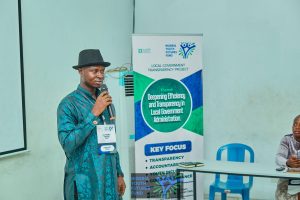
A youth from Bayelsa, Mr. Martins Daubry in partnership with the Nigeria Youth Future Fund, LEAP Africa, MacArthur Foundation, and Ford Foundation, has organised a two-day programme in Yenagoa to deepen conversation around governance at the local government level in the state and Nigeria in general.
The programme themed “Deepening Efficiency and Transparency in Local Government Administration” brought together young people, development actors, and public sector stakeholders in Bayelsa State to interrogate the realities of governance at the grassroots.
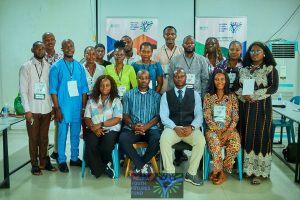
The programme sessions also focused on key issues such as transparency, accountability, youth inclusion, and the overall effectiveness of local government systems and were equally structured to provoke honest reflection and practical thinking about how governance can work better for everyday people.
The first day featured two speakers who approached the theme from different but complementary angles—Dr. Inebaraton Preye, Vice Chairman of the Nigeria Union of Journalists (NUJ), Bayelsa State Council, led the conversation on “The Role of Media” in deepening transparency and efficiency.
Drawing from his extensive experience as a journalist and peace advocate, he emphasized that the media remains one of the most powerful tools for accountability at the local level.
He challenged participants, particularly young people, to see media not just as a platform for information, but as an instrument for change, one that can be used to question leadership, amplify community voices, and demand better governance.
His contribution underscored a simple but often overlooked reality: without an active and responsible media space, transparency becomes difficult to sustain.
Also speaking, Amananaghan Tare Maureen, a gender advocate and Executive Director of Fringe Voices Development Foundation, delivered a session on “Pathways to Transparency, Accountability and Sustainable Development in Local Government Administration.”
Her intervention which brought a necessary layer of caution to the discussion stressed the importance of holding leaders accountable.
She noted that accountability must be grounded in facts, adding that misinformation and poorly informed criticism can weaken advocacy efforts rather than strengthen them.
Drawing from her years of experience in community engagement and political participation, she also highlighted the importance of intentional youth involvement not just as participants in governance conversations, but as informed actors who understand the systems they seek to challenge.
The second day shifted focus more directly to youth inclusion, with Mr. Tarinyo Akono, a communication specialist and former Chairman of the Bayelsa NUJ, leading discussions on “The Role of Youths in Deepening Efficiency and Transparency in Local Government Administration.”

His session centered on the idea that youth participation in governance must move beyond rhetoric.
He encouraged young people to engage more deliberately with governance structures by asking questions, demanding accountability, and positioning themselves within systems where decisions are made.
He also pointed out that while young people often express dissatisfaction with governance outcomes, meaningful change requires sustained engagement, not just criticism from the sidelines.
The programme coordinator, Mr. Martins Daubry, also facilitated a session that tied together the conversations from both days, reinforcing the need to move from dialogue to action.
Participants were encouraged to reflect on practical steps they could take within their communities to promote transparency and accountability at the local level.
Across both days, a recurring theme was clear: improving local government administration is not solely the responsibility of elected officials, It requires a collective effort, one that includes the media, civil society, and especially young people.

The programme did not attempt to present governance as a perfect system, but rather as one that can be improved through intentional action, informed participation, and sustained pressure for accountability.
As discussions drew to a close, what remained was not just a set of ideas, but a challenge to rethink how governance is engaged with at the grassroots, and to recognize that real change often begins at the local level.
