

As global discussions around Africa’s energy future continue, Nigeria is showcasing a distinct model for sustainably increasing oil production, attracting investments, and retaining value through local participation.
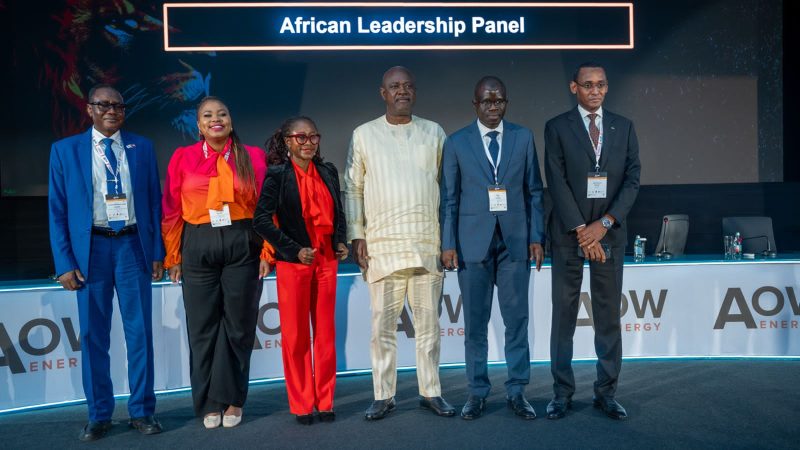
This is according to Nigeria’s Oil Minister, Senator Heineken Lokpobiri, who spoke at #AOW2025 in Accra, Ghana.
Nneamaka Okafor,
Lokpobiri’s Special Assistant on Media and Communication, quoted the minister to have reaffirmed that the country remains one of the most attractive investment destinations in Africa’s oil and gas landscape.
Highlighting Nigeria’s proactive reforms and policy incentives, Lokpobiri explained how the government has created a competitive environment that is driving renewed investor confidence—particularly in the deep offshore segment.
“Let me be clear, no International Oil Company has exited Nigeria. What we are seeing is a strategic shift: IOCs are moving into deepwater operations, where we are actively attracting new investments,” Senator Lokpobiri said.
He noted that while IOCs are divesting from onshore assets, those assets are not being abandoned but are rather being acquired by competent Nigerian indigenous companies.
“These companies, he explained, are not only maintaining operations but increasing production and ensuring that more value is retained within the country.
“The divestment by IOCs from onshore is not a loss to Nigeria. In fact, it’s a gain. Our indigenous companies have stepped up and are doing remarkably well.
“This enhances in-country value retention, grows local capacity, and contributes significantly to production volumes,” he stated.
Lokpobiri emphasized that Nigeria’s oil sector is robust and future-facing, supported by an enabling environment that encourages long-term investments.
He credited the Petroleum Industry Act as a foundational reform that has provided clarity and stability, enabling players to plan and invest with confidence.
“We have created the right incentives for investment across upstream, midstream, and downstream.
“That is why production is picking up, and why Nigeria continues to lead in attracting serious energy capital in the region,” he added.
He restated Nigeria’s commitment to a pragmatic energy agenda—one that promotes production, maximizes value, and strengthens the country’s role as a regional energy hub.


