

By Wilson Macaulay
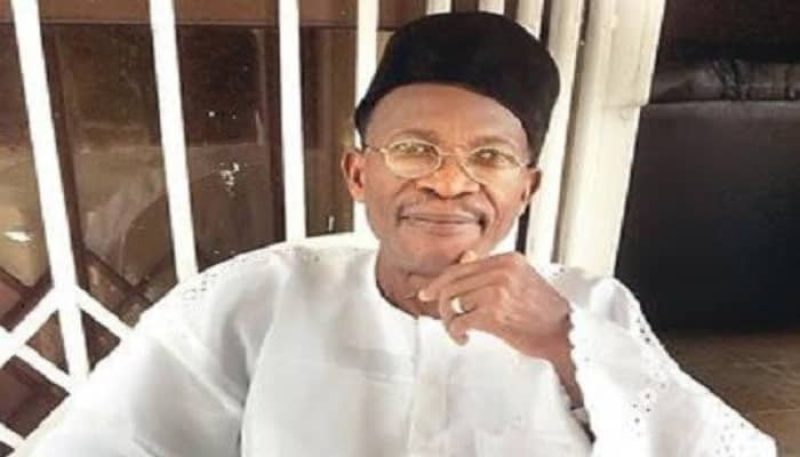
What many consider as the champion of the struggle for Nigerian workers—Chief Frank Kokori, the legendary General Secretary of the National Union of Petroleum and Natural Gas Workers (NUPENG), has bid farewell to mother earth after a protracted illness, leaving behind a legacy anchored and etched in the annals of Nigeria’s labour movement.
His demise on the 7th of December 2023 which was his birthday, marked the end of a golden chapter in the history of labour movement in Nigeria because he stood as the unwavering symbol of the tireless fight for a better life for Nigerian workers.
In more ways than one, without any intent of exaggeration, I sincerely see the passage of Chief Frank Kokori 1944 – 2023 as the end of a golden era.
Kokori’s journey in the realm of workers’ rights began decades ago, and his indomitable spirit and commitment to the cause propelled him to become a revered figure among the labour force in Nigeria,
as he took on the military juntas of Ibrahim Banganda (IBB) and Sani Abacha without fear for their triggers in the celebrated June 12 saga which is today our democracy day.
As the General Secretary of NUPENG, the late Chief Frank Kokori played a pivotal role in shaping the destiny of the union and advocating the rights and welfare of the Nigerian workers no matter whose ox is gored.
One of Kokori’s defining moments was his leadership during the historic oil workers’ strike of 1994, a period that tested the resilience of both the workers and the Nigerian government. The strike, which lasted for several months, sought to address issues of economic injustice, corruption, and the need for improved working conditions for Nigerian workers.
Late Chief Kokori emerged as a formidable force, fearlessly championing the rights of the workers and standing firm against oppressive policies. Beyond the immediate concerns of the oil sector, Kokori’s influence extended to the broader landscape of labour rights in Nigeria.
His unwavering dedication to the betterment of workers’ lives made him a beacon of hope for those who yearned for fair treatment, just wages, and improved working conditions across various industries in Nigeria.
Chief Kokori’s impact was not confined to the negotiating table or the picket lines alone. He understood the power of unity and solidarity, fostering a sense of belonging among Nigerian workers. His ability to articulate the collective aspirations of the labour force resonated not only within the union but across the nation, making him a respected voice in the struggle for social justice globally.
It is instructive to note that the impressive dossiers of Chief Frank Kokori made him a formidable force
in the labour movement in West Africa, the African continent, and even labour affairs World- Wide. As he went around the World, Chief Frank Kokori had just one message, better wages for workers in the World.
Though the enigmatic Frank Kokori ventured into politics and became a BoT member of the ruling APC, until his passage, Nigerians across the board prefer to celebrate Chief Kokori as the symbol of the struggle for the Nigerian worker to become
dignified in all ramifications.
As we bid farewell to Chief Frank Kokori, it is imperative to reflect on the enduring lessons he left behind. His life serves as a reminder that the fight for workers’ rights is an ongoing journey, one that requires resilience, determination, and a commitment to the common good.
The legacy of Chief Kokori is an inspiration for current and future generations of labor activism and l urge them to continue the noble struggle for a more just and equitable society.
To draw the curtain on my epitaph, let me remark that the Nigerian labor movement and Nigerians at home and in the diaspora will mourn the loss of a true icon, a man whose name will forever be synonymous with the fight for a better life for the Nigerian worker.
Adieu, Chief Frank Kokori— your contributions will continue to inspire and guide us on the path towards a more just and equitable future for all Nigerians and even across the continental shelf of Africa to the rest of the world because you truly represented the golden chapter in the history of the Nigerian labor movement.


